Mid Autumn Festival 2026 in China: Dates, Traditions & Travel Guide
Mid Autumn Festival falls on Friday, September 25, 2026. Here is how to experience its food, moonlit traditions and distinctly different atmosphere across mainland China, Hong Kong and Macao.
Mid Autumn Festival 2026 at a glance
Public holiday: September 25–27
Public holiday: September 26
Public holiday: September 26
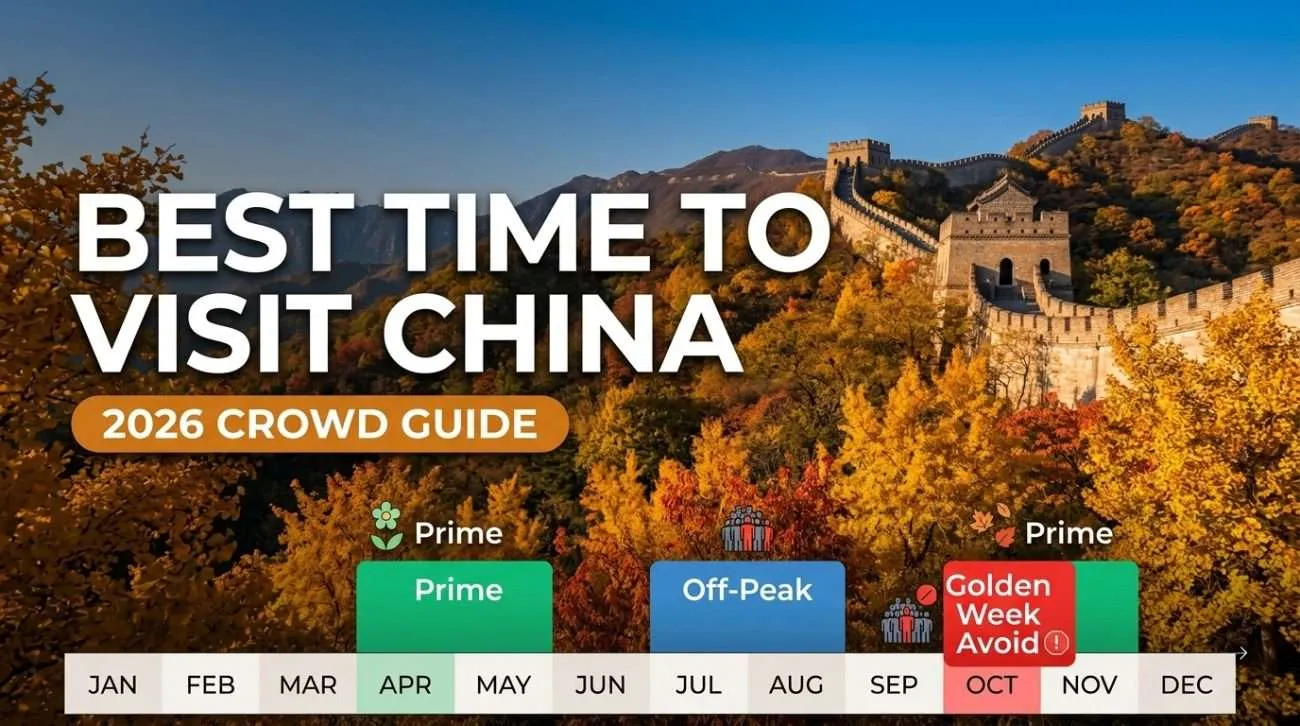
Dates verified against the official 2026 calendars of mainland China, Hong Kong and Macao. Family dinners, evening events and short-break travel can make popular places busier.
What the Mid Autumn Festival celebrates
Mid Autumn Festival takes place on the fifteenth day of the eighth lunar month. The round moon is associated with completeness and reunion, so the evening is traditionally centred on family: people gather for dinner, share mooncakes and spend time outdoors looking at the moon.
The familiar legend of Chang’e, who ascends to the moon, adds another layer to the festival. Her story appears in rabbit lanterns, moon imagery and seasonal displays, but it is better understood as living folklore than as one fixed historical account.
For a visitor, one detail is easy to miss: much of the festival happens inside homes and around family tables. Public lantern displays are only one side of Mid Autumn. A quiet lakeside walk, a bakery counter stacked with regional mooncakes or a packed reunion dinner can reveal just as much about the holiday.
The food tells a regional story

Mooncakes are the festival’s best-known food, but they are not one standard pastry. Cantonese versions commonly use a thin baked crust with lotus seed paste and salted egg yolk. Suzhou-style mooncakes are flaky and may be sweet or savoury. Beijing has older local styles, while modern bakeries add tea, custard, chocolate and fruit. Snow-skin mooncakes are served chilled and are particularly visible in Hong Kong.
They are rich, so they are normally cut into wedges and shared. Pomelo, seasonal fruit and tea often sit alongside them. The practical pleasure for a traveller is comparison: visit a traditional bakery, try a regional style and notice how flavours change between cities.
Food also explains why restaurant planning matters. September 25 is a family evening, and sought-after restaurants may be difficult to book at short notice. Reserve ahead if dinner is important; otherwise, make lunch the main meal and leave the evening open for a walk and moon viewing.
Where to experience Mid Autumn Festival in mainland China
There is no single “best” city. Choose according to the atmosphere you want rather than assuming every destination stages the same lantern festival.
Beijing
Older northern customs, historic neighbourhoods, lakes and courtyard atmosphere. Verify special programmes instead of assuming every heritage site has one.
Shanghai
Riverfront nights and active city programming. Official listings confirm Mid Autumn folk activities in Minhang from September 25 to 27.
Hangzhou or Suzhou
Lakes, canals and classical gardens for travellers drawn to scenery and poetry. Early walks can be calmer than peak evening viewpoints.
Guangzhou or Shenzhen
Cantonese food and efficient onward routes to Hong Kong and Macao. Guangzhou offers more historical depth; Shenzhen is a practical transport base.
Shanghai’s municipal government has announced special transport planning during the holiday and the WorldSkills competition. Check the current official Shanghai event listings rather than relying on copied schedules.
How Hong Kong celebrates differently
Hong Kong makes the public side of Mid Autumn unusually easy to see. Families still gather and share mooncakes, but harbour parks, illuminated streets and late-evening events bring the celebration into public space.
The city’s most distinctive tradition is the Tai Hang Fire Dragon Dance. In 2026 it runs on September 24 from 7pm to 10pm, September 25 from 7pm to 11:30pm, and September 26 from 7pm to 10pm. The 67-metre dragon is covered with around 12,000 burning incense sticks and carried through Tai Hang by more than 300 performers. On September 25, the main performance extends to Victoria Park at 10:30pm. Crowd-control measures may apply, so consult the official event page before setting out.
Hong Kong’s food culture adds another texture. Traditional lotus-seed mooncakes sit beside snow-skin and contemporary hotel editions; tea, tong yuen and seasonal fruit remain part of family meals. Rather than collecting boxes, buy a few individual flavours and share them—the symbolism makes more sense that way.
Macao offers a slower contrast

Macao is close enough to add to a southern China or Hong Kong itinerary, but it should not be treated as a smaller copy of either place. Its Portuguese-patterned pavements, Chinese temples, compact historic centre and waterfront create a different setting for an evening walk.
The Macao Government Tourism Office describes local celebrations as family dinners followed by moon viewing in gardens, beside lakes or on beaches, with mooncakes, seasonal fruit and children’s lanterns. That quieter pattern is valuable after a crowded city event.
One festival, three travel experiences
| If you want… | A stronger fit |
|---|---|
| Regional food, historic neighbourhoods and a deeper mainland itinerary | Mainland China |
| Large public lantern displays, harbour parks and the fire dragon dance | Hong Kong |
| A compact historic centre and a slower moonlit side trip | Macao |
| All three perspectives in one journey | Guangzhou or Shenzhen, then Hong Kong and Macao |
A combined itinerary works because the distances are manageable, not because the three places are interchangeable. They have different public holidays, transport systems, payment habits and mobile networks. Allow time for crossings and resist turning three destinations into a checklist.
A practical Mid Autumn travel plan
Three to four weeks before
- Book major transport and accommodation.
- Keep September 25 free of late transfers.
- Reserve a special dinner if needed.
During the final week
- Recheck official event pages and weather.
- Confirm tickets or visitor registration.
- Review border, ferry or rail routes.
Before leaving the hotel
- Save addresses in Chinese and English.
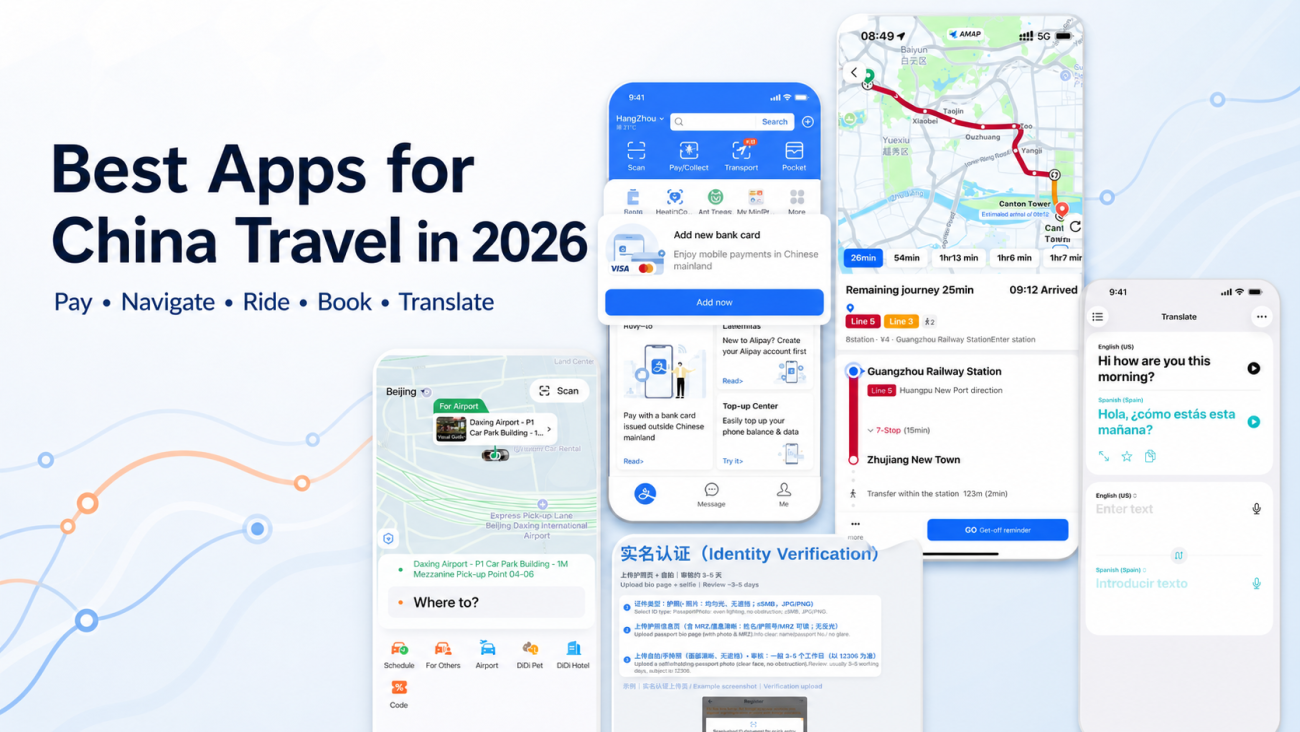
- Keep ticket screenshots and an offline map.
- Expect temporary crowd controls.
Staying connected without turning the trip into a phone project
Mobile data is useful during Mid Autumn because plans can change: you may need a metro update, event map, restaurant message, translation or directions back from a crowded park. International roaming, a local SIM, pocket Wi-Fi and a travel eSIM can all solve that problem; the sensible choice depends on your route and devices.
Crossing between mainland China, Hong Kong and Macao adds another consideration because each destination uses its own mobile networks. Check the geographic coverage of any plan rather than assuming that a product labelled “China” includes all three places. A mainland-only traveller can consider a China Mainland eSIM, while someone following the cross-border itinerary described above may find a China Mainland–Hong Kong–Macao eSIM more practical than installing a separate profile at each border. On an eligible regional plan, network selection is automatic when you enter Hong Kong or Macao; no manual network choice is required.
Before purchasing any eSIM, use the device compatibility checker to confirm that your exact phone model supports eSIM and is carrier-unlocked. It is better to discover a compatibility restriction before departure than while trying to install a profile on hotel Wi-Fi.
Choose data by behaviour, not by the number of photos you hope to take. Maps, messages and electronic tickets use relatively little; frequent social uploads, video calls and hotspot use require more. The guide to how much data you need in China offers a fuller estimate without turning this article into a tariff table.
Is Mid Autumn Festival the same as Chuseok or Tsukimi?
A Chinese Mid Autumn itinerary cannot simply be reused for Seoul or Tokyo, and there is no reason to force Japan and South Korea into a China-focused route merely because the festivals appear near one another on the calendar.
Frequently asked questions
When is the Mid Autumn Festival in 2026?
It falls on Friday, September 25. Mainland China has a public holiday from September 25 to 27. Hong Kong and Macao observe September 26 as a public holiday.
Is China crowded during the Mid Autumn Festival?
Popular attractions, transport hubs, short-break destinations and evening events can be busy. Advance transport and restaurant planning is sensible.
Are shops and attractions closed?
There is no universal closure rule. Major attractions and shopping areas often remain open with possible adjusted hours, while independent businesses choose their own schedules.
Where is the best place to celebrate?
It depends on the experience: Beijing for older northern traditions, Shanghai for city programming, Hangzhou or Suzhou for waterside scenery, Hong Kong for public lantern events and Macao for a quieter historic-city extension.
Can I visit mainland China, Hong Kong and Macao on one trip?
Yes, particularly through Guangzhou or Shenzhen, but treat each border crossing as a real travel step and check entry documents, transport, payment preparation and connectivity.
Do I need a separate eSIM in each place?
Not necessarily. A regional plan that explicitly covers all three can use eligible partner networks throughout. Confirm coverage, validity and the data policy before purchase.
A festival worth slowing down for
The best way to experience the Mid Autumn Festival 2026 in China is not to collect the largest number of events. Leave space for an evening meal, a shared mooncake and a walk after dark.
Plan the time-sensitive details carefully, then let the festival itself feel unhurried. That balance is closer to the spirit of Mid Autumn than racing from one photo stop to the next.
High-speed data, wherever your journey leads
Enjoy instant, secure mobile data with Ezigo eSIM in 200+ destinations. No physical SIM needed.