TRAVEL CONNECTIVITY / OUTLOOK
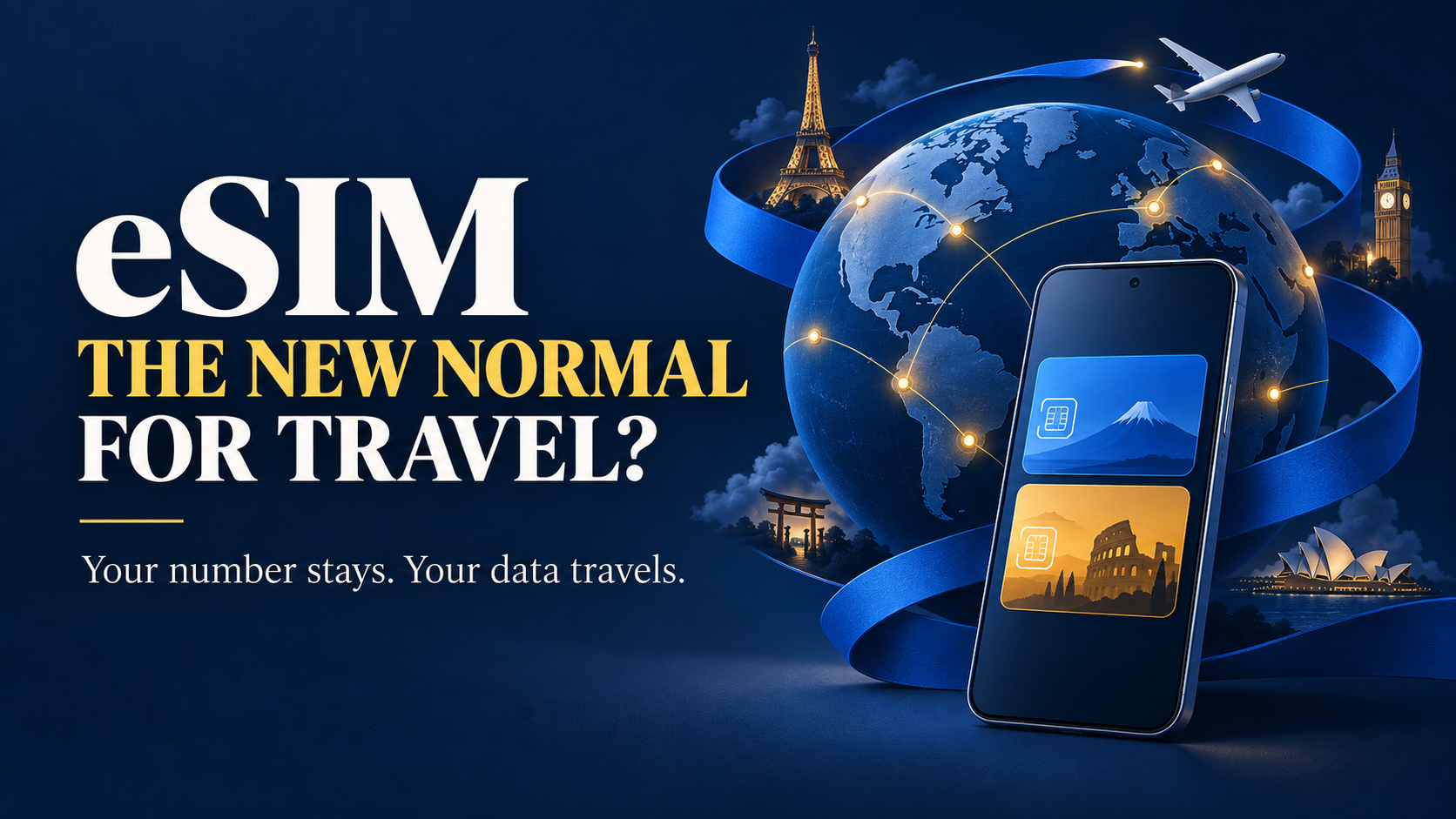
Is eSIM Becoming the New Normal for International Travel?
Your phone number can stay familiar while your data plan changes with the journey. That is the shift worth watching—not simply the disappearance of a SIM tray.
Published by Ezigo, a travel eSIM provider. This article examines the category, including situations where another option may be more suitable. September 10, 2026.
An eSIM-only phone changes a familiar travel habit: arriving at an airport and buying a physical SIM is no longer an option for that device. Apple’s September 9 announcement gives that change a fresh reference point: the company says iPhone Duo has an eSIM-only design worldwide. Apple’s announcement establishes the hardware fact, not which travel plan its owners should buy.
The more useful question is whether eSIM for international travel is becoming an ordinary part of planning a trip. Increasingly, a traveler can arrange overseas data separately from the phone number they use all year. That creates flexibility, but also another decision: who supplies the connection, what it includes, and what happens if it fails?
What Would Make eSIM the New Normal for International Travel?
A digital SIM lets a compatible device load a mobile subscription without inserting a removable card. That describes the technology. A prepaid travel data package is one possible use of it, not the definition of eSIM itself.
Three different developments can therefore get confused: more phones supporting eSIM, more people using eSIM for their everyday subscription, and more travelers buying a separate overseas plan. Progress in the first does not tell us how many people do the third.
The evidence calls for some restraint. In March 2026, GSMA Intelligence reported that, across 11 major countries surveyed, an average of 12% of consumers who had traveled internationally in the previous year used eSIM abroad. More than 70% of those users chose telco eSIM services. This was not a global census of travelers or a measure of independent travel brands alone. GSMA Intelligence’s survey summary
For eSIM to feel normal rather than novel, three things need to become routine: finding a suitable plan, getting it working, and recovering service when something goes wrong. A new handset helps with the first technical barrier. It cannot resolve every commercial or support problem that follows.
Your Phone Number and Your Travel Data Can Serve Different Jobs
Your established number is how people know you. The data allowance for a week overseas has a shorter job to do, and it does not always need to come from the same subscription.
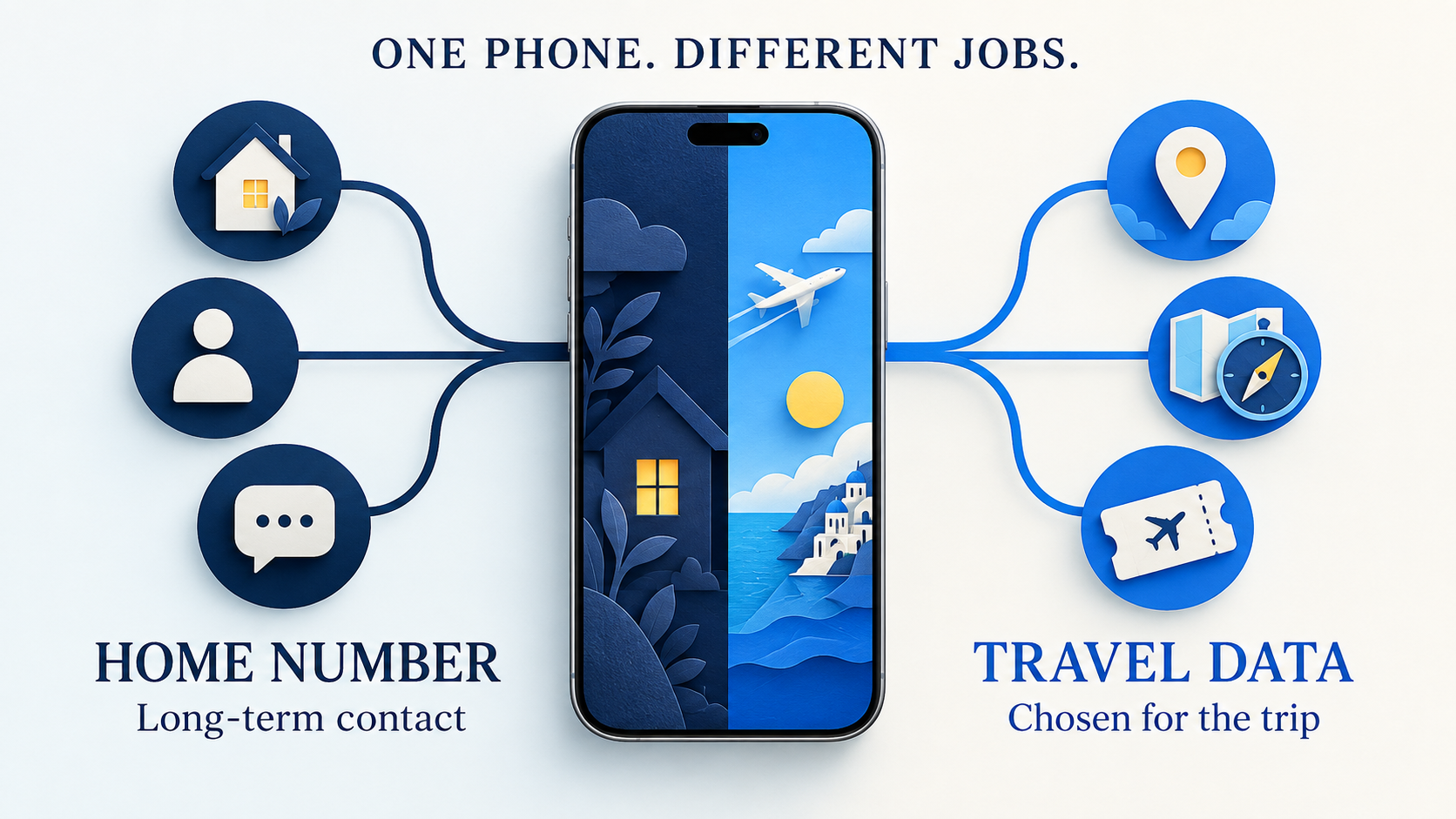
On supported devices, dual-SIM arrangements can keep a home line alongside a travel line. There are conditions: the device must support the configuration, another provider may require an unlocked phone, and keeping the home line active can still incur roaming charges. Apple’s international eSIM guide
That distinction matters when comparing plans. A data-only eSIM does not by itself supply a local phone number or ordinary voice and SMS service. Nor does a second data line guarantee that a bank’s verification message will arrive on your original number, or that receiving it will be free.
For the traveler, the decision becomes more precise: which number must remain reachable, and which plan should carry the data? Separating those questions is more useful than assuming that replacing a physical card replaces every service attached to it.
Travel Data Is Moving Into the Booking Journey
Connectivity can now appear among the services travelers encounter before departure, rather than only at an airport counter. GSMA Intelligence’s March 2026 article describes eSIM offers through Trip.com bookings and loyalty benefits, and through certain Revolut bank-account packages. Those examples show distribution expanding; they are not a promise that a particular benefit is available to every reader today. The observed booking and banking examples
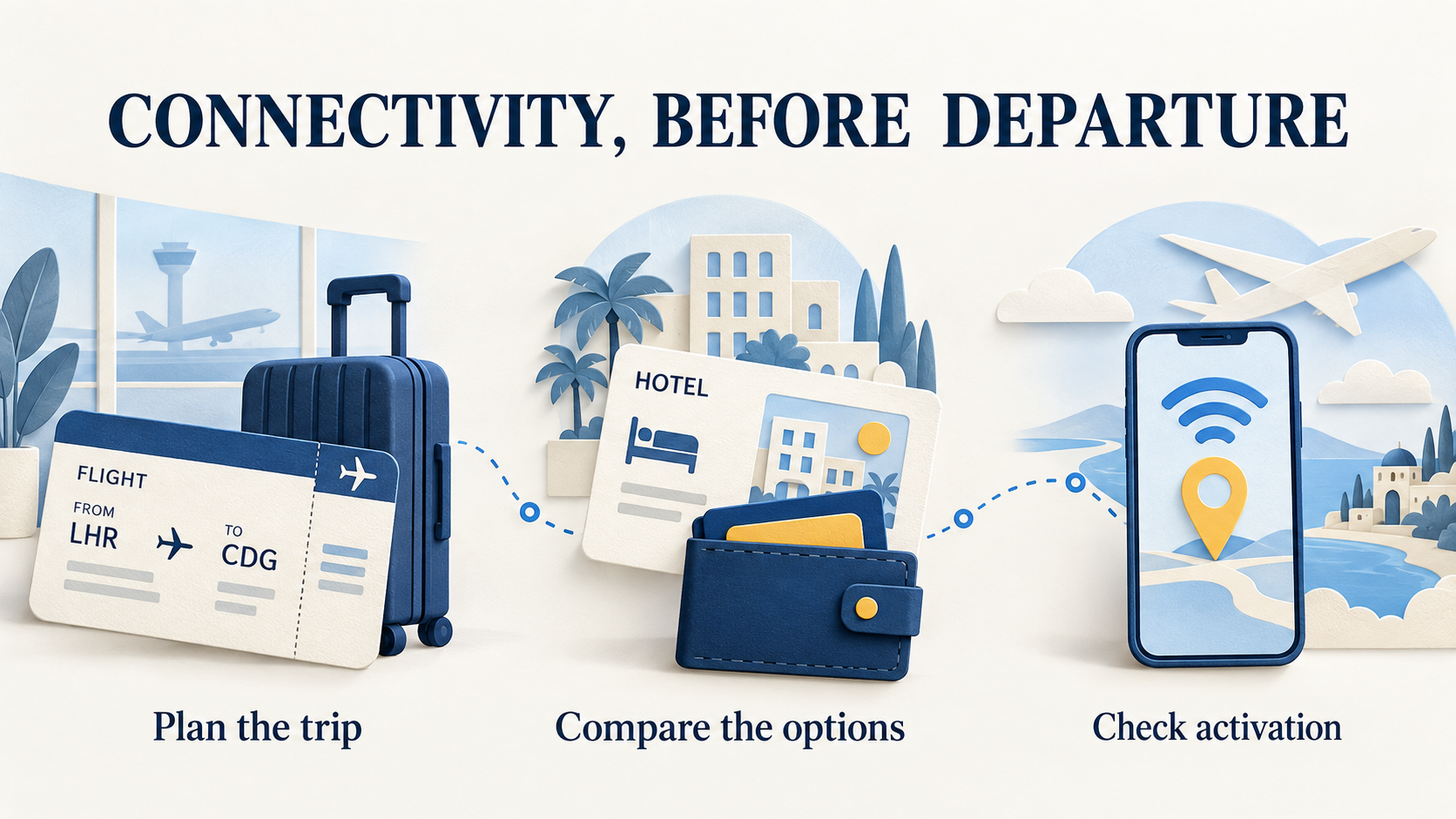
This could change what travelers compare. Instead of starting with a search for a SIM shop, someone might first examine a benefit already offered by their booking platform or bank. The convenient option gains an early look, even if it is not the best fit for the whole trip.
A small included allowance might cover arrival but leave most of the journey unfunded. Before relying on it, ask when it expires, what additional data costs, and which company handles a failed activation. The place that presents an offer is not necessarily the team that resolves a network problem.
The likely next step is less a single dominant eSIM brand than more opportunities to arrange data inside an existing travel routine. Whether that simplifies the experience depends on how clearly those responsibilities are explained.
A Holiday, a Business Trip and a Semester Abroad Need Different Plans
The same technology can solve different problems. Trip length matters, but so do the need for a local number and the consequences of losing service.
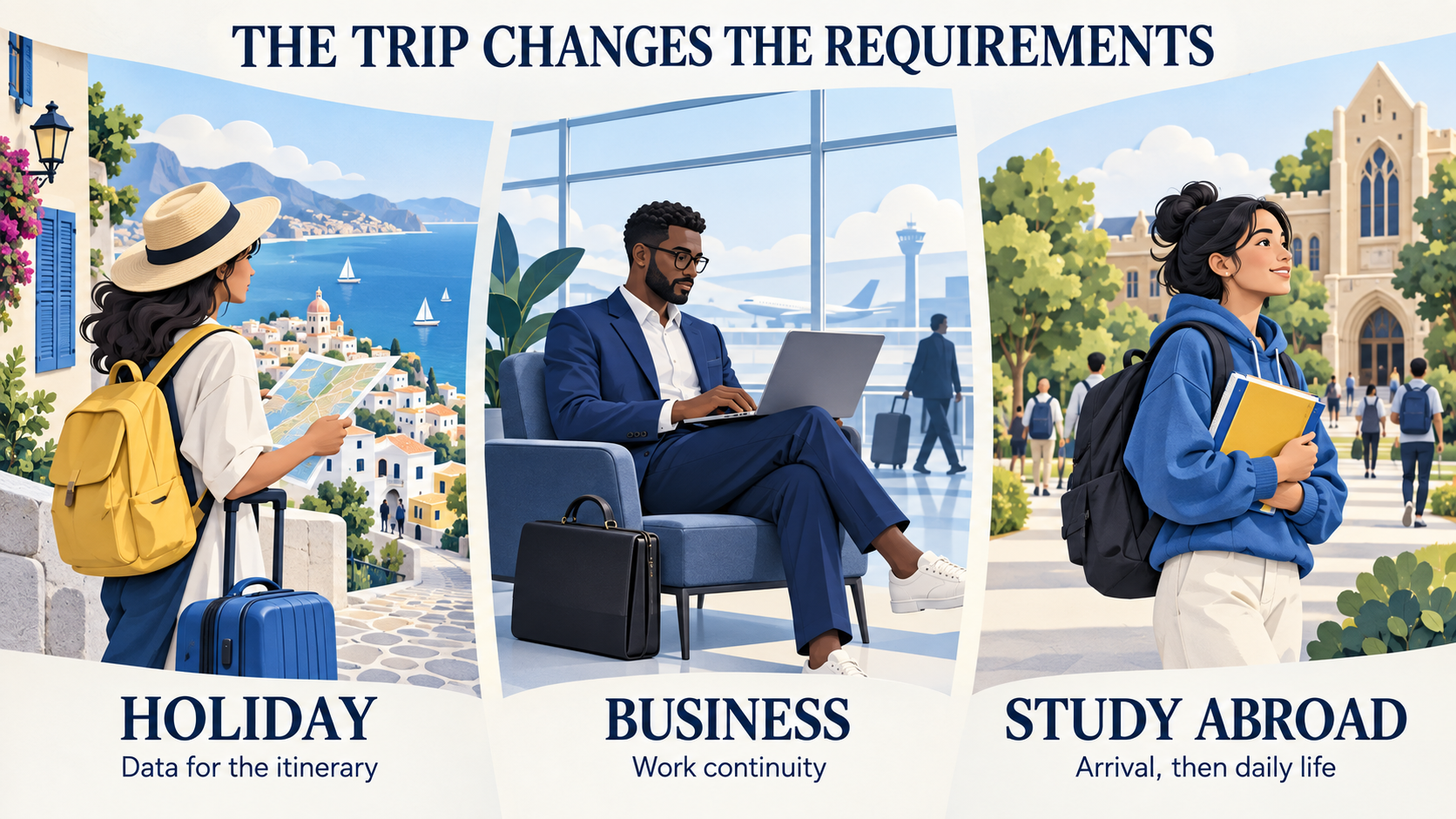
A holiday: fit the whole itinerary
Start with the destination and dates, then the activities that need mobile data. Maps and messages create a different requirement from frequent video uploads. For a multi-country trip, check every stop rather than treating “regional” as universal coverage. Also check the roaming already included in your home plan: another purchase may be unnecessary.
A business trip: plan for the cost of an interruption
An eSIM for business travel should be assessed against the work it must support. Ask whether hotspot use is permitted, whether the allowance suits laptop use, and whether your employer allows another subscription on the device. A plan that looks inexpensive is less attractive if resolving an issue would consume time before a meeting. Keep essential addresses and meeting details available offline.
Studying abroad: distinguish arrival from living there
For international students, a short-term data plan can be an arrival arrangement while longer-term options are assessed. Semester-long needs deserve a separate decision: monthly cost, a local number, account eligibility and renewal conditions may matter more than convenient pre-departure purchase. “Good for the first week” and “good for the academic year” are different judgments.
Where Travel eSIM Competition Could Go Next
The next stage is unlikely to be only a contest over price per gigabyte. Three developments deserve attention, with different levels of evidence behind them.
Mobile operators will remain part of the choice
In October 2025, Juniper Research forecast that more operators would introduce travel eSIMs in 2026 alongside existing roaming services. That is a forecast of coexistence, not the disappearance of operators from travel connectivity. Juniper Research’s outlook
The practical implication is to compare the offer rather than the category label. A home operator, local carrier and independent provider can each be worth considering; the answer may change with the destination and the benefits already included in a subscription.
Recovery could become a stronger reason to choose a provider
Removing the physical card does not remove the need to restore service after a failed installation, lost phone or device change. Apple specifically advises against deleting an eSIM as a troubleshooting step unless directed by the carrier; erasing it may require obtaining another one. Apple’s eSIM deletion guidance
That makes recovery instructions a useful comparison criterion now—and a plausible point of competition ahead. Look for an understandable process, not just a fast-purchase promise. No provider’s transfer or reinstallation policy should be assumed from the word “eSIM.”
Familiarity may matter more than a small price difference
There is a practical reason familiarity could encourage repeat use: someone who understands a service’s installation and support process has less to learn on the next trip. That is our interpretation, not a measured finding about all travelers. A familiar provider still needs to earn the next purchase; a previous good experience does not establish the price, network or renewal rules of another package.
What Could Still Slow the Shift?
Adoption is not automatic. GSMA Intelligence’s July 2025 analysis identified limited availability beyond flagship devices and difficult migration processes among the obstacles to eSIM uptake. A premium handset announcement addresses neither issue for everyone. GSMA Intelligence’s adoption analysis
There is also a difference between a simpler purchase and a better connection. Travel eSIMs can still use roaming arrangements, including routing traffic through a provider’s home network; the SIM format alone does not guarantee local routing or low latency. One infrastructure provider’s explanation of home-routed roaming illustrates why these are separate questions.
The signals worth watching are practical: broader device support, clearer activation rules and more useful recovery processes. More sellers or larger market forecasts would not, on their own, prove that those problems have been solved.
For your next trip, use a short check rather than the trend as a purchasing rule:
- Existing service: what does your current roaming arrangement already cover?
- Number needs: is data enough, or do you need local calls and SMS?
- Trip fit: do the countries, validity period, data allowance and hotspot terms match your plans?
- Getting connected again: what are the installation, replacement and support instructions?
Apply the same checks to any provider. For a Thailand trip, for example, review the selected plan’s conditions on Ezigo eSIM rather than assuming the technology’s general advantages establish what that package includes. If installation is the sticking point, the separate eSIM troubleshooting guide addresses activation, signal and data problems.
Conclusion: Arrange Data Around the Trip, Not the Hype
eSIM for international travel is becoming a more established option, but “new normal” should mean easier decisions and dependable service—not an obligation to buy a different plan. Keep the number arrangement that suits your life, choose data around the journey, and check how service can be restored if something goes wrong. Those are better reasons to change a travel habit than a missing SIM tray alone.
Frequently Asked Questions
Does an eSIM-only iPhone mean I must buy a third-party travel eSIM?
No. eSIM-only describes the device’s SIM format. Your existing carrier’s roaming service or a suitable local-carrier plan may still meet your needs; a separate travel plan is another option.
Does a travel eSIM replace my phone number?
A data-only plan does not replace the voice and SMS functions of your existing subscription. Consider those needs separately and check the device’s supported dual-SIM configuration before relying on two lines.
Is eSIM always cheaper than international roaming?
No. Compare the full trip cost with the roaming benefits you already have, including sufficient data, validity and any additional purchases. Convenience alone is not evidence of a saving.
High-speed data, wherever your journey leads
Enjoy instant, secure mobile data with Ezigo eSIM in 200+ destinations. No physical SIM needed.