Following the phased rollout roadmap established by the European Commission, the Europe Entry Exit System (EES) is operational across external Schengen borders. As of 2026, eligible non-EU short-stay travelers must be prepared for digital biometric processing upon arrival across participating European frontiers.
System Status & Scope Across 29 Countries
The Europe Entry Exit System is an automated border infrastructure registering non-EU short-stay visitors electronically, replacing physical passport stamps. The system automatically monitors short-stay limits under the standard 90/180-day limitation rule.
Which 29 Countries Operate EES?
The system covers external borders across 29 European countries: Austria, Belgium, Bulgaria, Croatia, Czechia, Denmark, Estonia, Finland, France, Germany, Greece, Hungary, Iceland, Italy, Latvia, Liechtenstein, Lithuania, Luxembourg, Malta, Netherlands, Norway, Poland, Portugal, Romania, Slovakia, Slovenia, Spain, Sweden, and Switzerland.
Non-EES Exceptions: Ireland and Cyprus do not use EES. When travelling to or from Ireland or Cyprus, travellers will not undergo EES digital registration, and passports will continue to be stamped manually.
EES vs. ETIAS: What Is the Difference?
Travellers frequently confuse EES with ETIAS. They are two distinct EU border mechanisms:
- Conducted in person at the external border terminal upon arrival.
- Records biometric identifiers (facial images and fingerprints).
- Free of charge; you do not apply or pay in advance.
- ETIAS is not yet in operation. The EU expects it to start in the last quarter of 2026.
- No application or payment is required at present.
- Once operational, eligible visa-exempt visitors will apply online prior to flight departure.
Biometric Requirements by Visa Status & Age
Biometric intake under the Europe Entry Exit System is not uniform for all visitors. Procedures depend strictly on your visa category and age under official EU border directives:
| Traveller Category | Biometric & Verification Procedures |
|---|---|
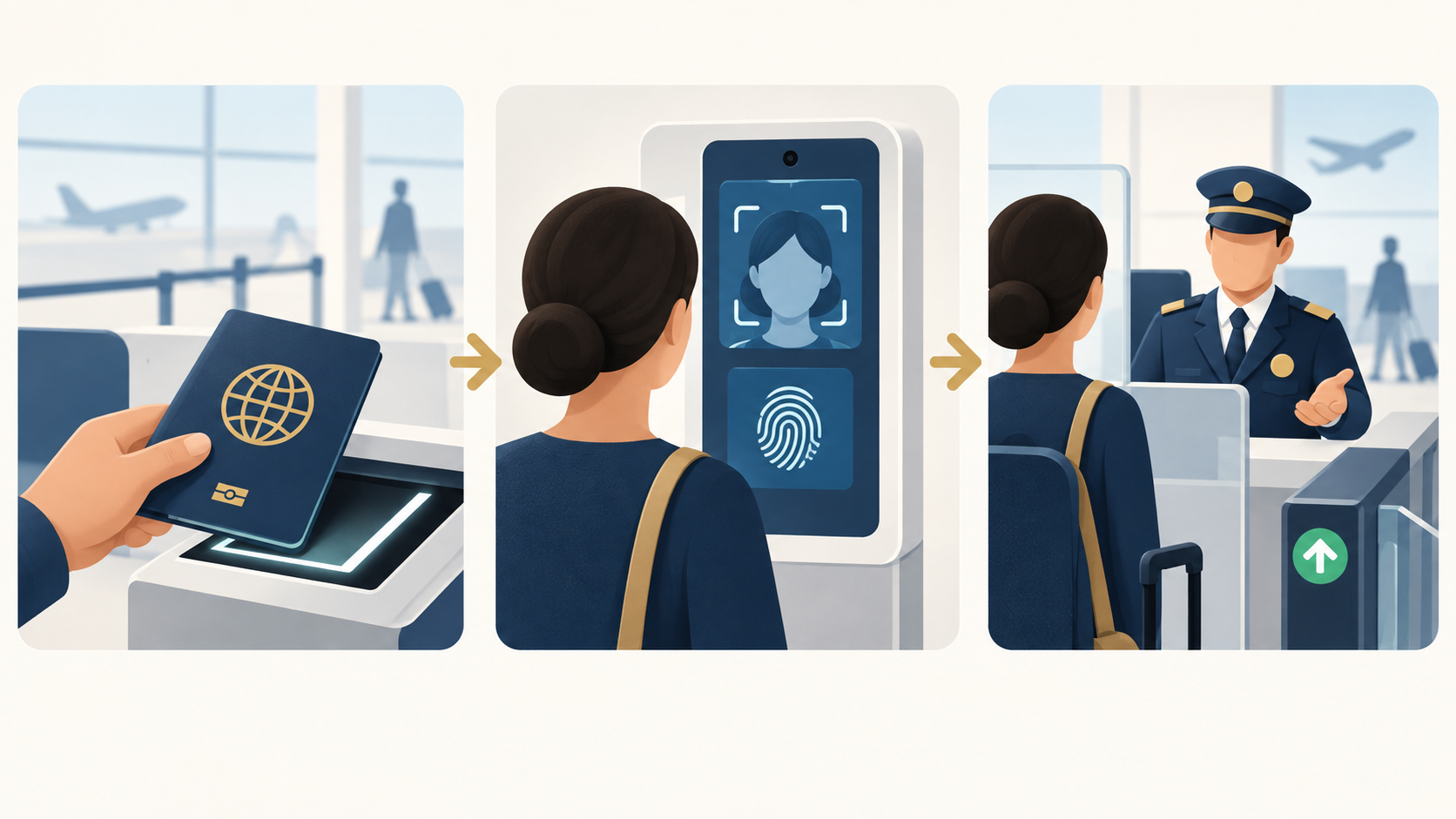
| Short-Stay Visa-Exempt Visitors (e.g., US, UK, Canadian, Australian nationals) | Must register a live facial image and four fingerprints upon arrival at self-service kiosks or manned officer booths. |
| Short-Stay Visa Holders (Holders of a valid Schengen C-Visa) | Fingerprints are already recorded in the Visa Information System (VIS) and are not stored again in EES. Only live facial verification and passport validation are conducted. |
| Children Under 12 Years Old | Exempt from fingerprint collection. Complete facial capture and entry formalities as instructed by border personnel. |
| Holders of Valid Residence Permits or Long-Stay Visas issued by EES Countries | Exempt from EES registration upon presenting their valid national permit or long-stay credential. Consult the official EU exemption list. |
First Schengen Border Crossing: Official Process
Departures & Temporary Internal Border Controls
EES logs movements strictly at external Schengen frontiers. When departing, your passport is scanned at the exit gate, your biometrics are matched electronically, and your departure timestamp is recorded.
Are there internal border controls? Inside the Schengen area, there are normally no regular border checks. However, member states retain the legal right to reintroduce temporary internal border controls at road, rail, or air routes for public policy or security reasons. Always carry your valid passport when travelling between Schengen nations.
Transit Example: Toronto → Paris (EES entry logged) → Train to Geneva → Zurich → Toronto (EES exit recorded). The train journey between France and Switzerland does not register on EES kiosks.
Preparation & Flight Connection Planning
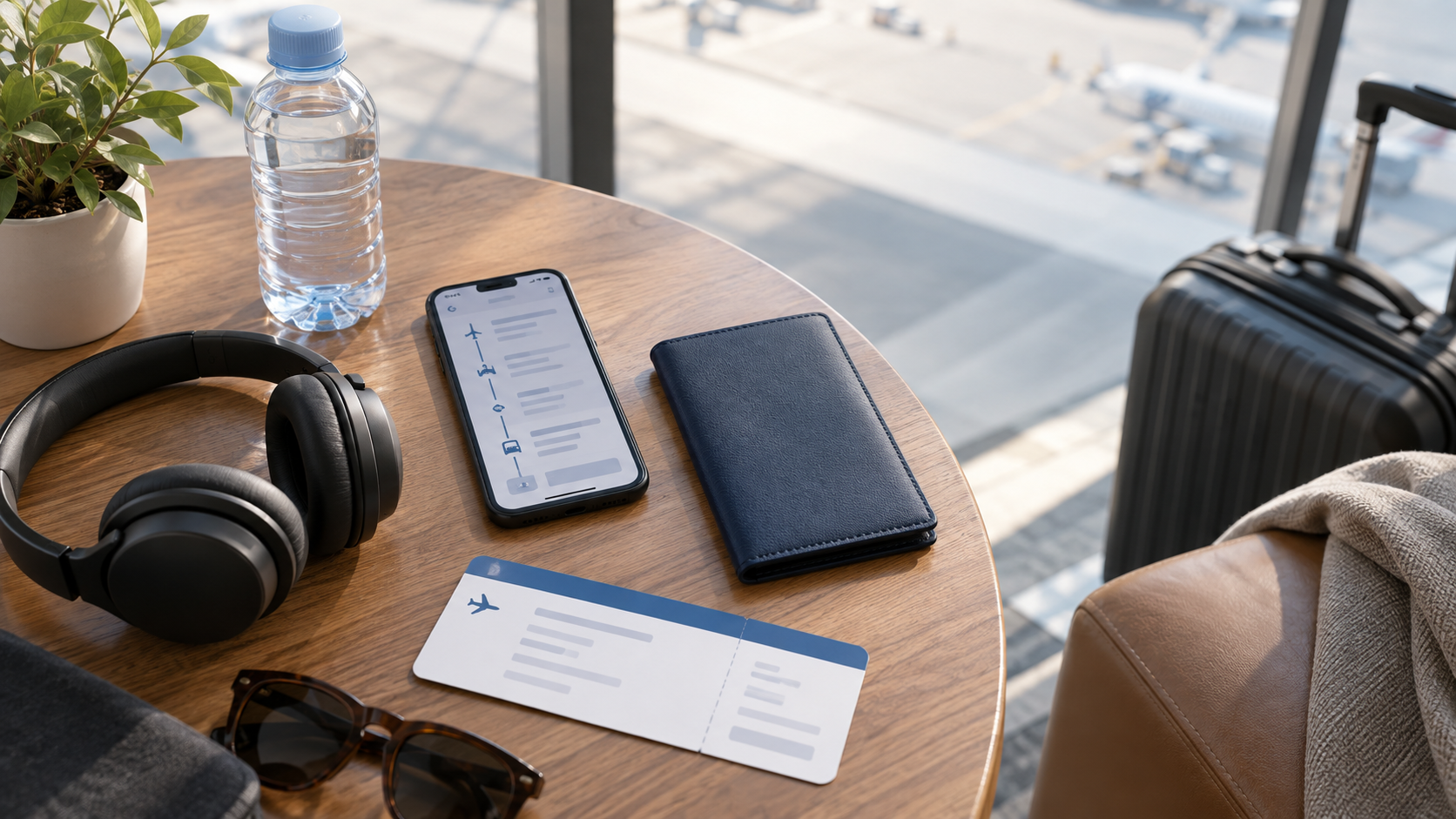
✓ Valid Passport: Ensure your passport has at least 3 months validity remaining beyond your planned departure from Schengen. Biometric passports enable automated kiosks, but valid non-biometric passports remain accepted via staffed lanes.
✓ Connecting Flights: Adhere strictly to your airline’s Minimum Connecting Time (MCT) and review border advice published by your initial port of arrival. Allow extra buffer on your first trip to complete initial registration comfortably.
✓ Travel Documentation: Keep digital copies of return airfare, lodging bookings, and travel insurance accessible on your smartphone.
✓ First-Time Logistics: Read our comprehensive Europe travel guide for first-timers to plan baggage packing, train transfers, and city connections.
Arriving in the Schengen Area: Mobile Connectivity & Transport Tips
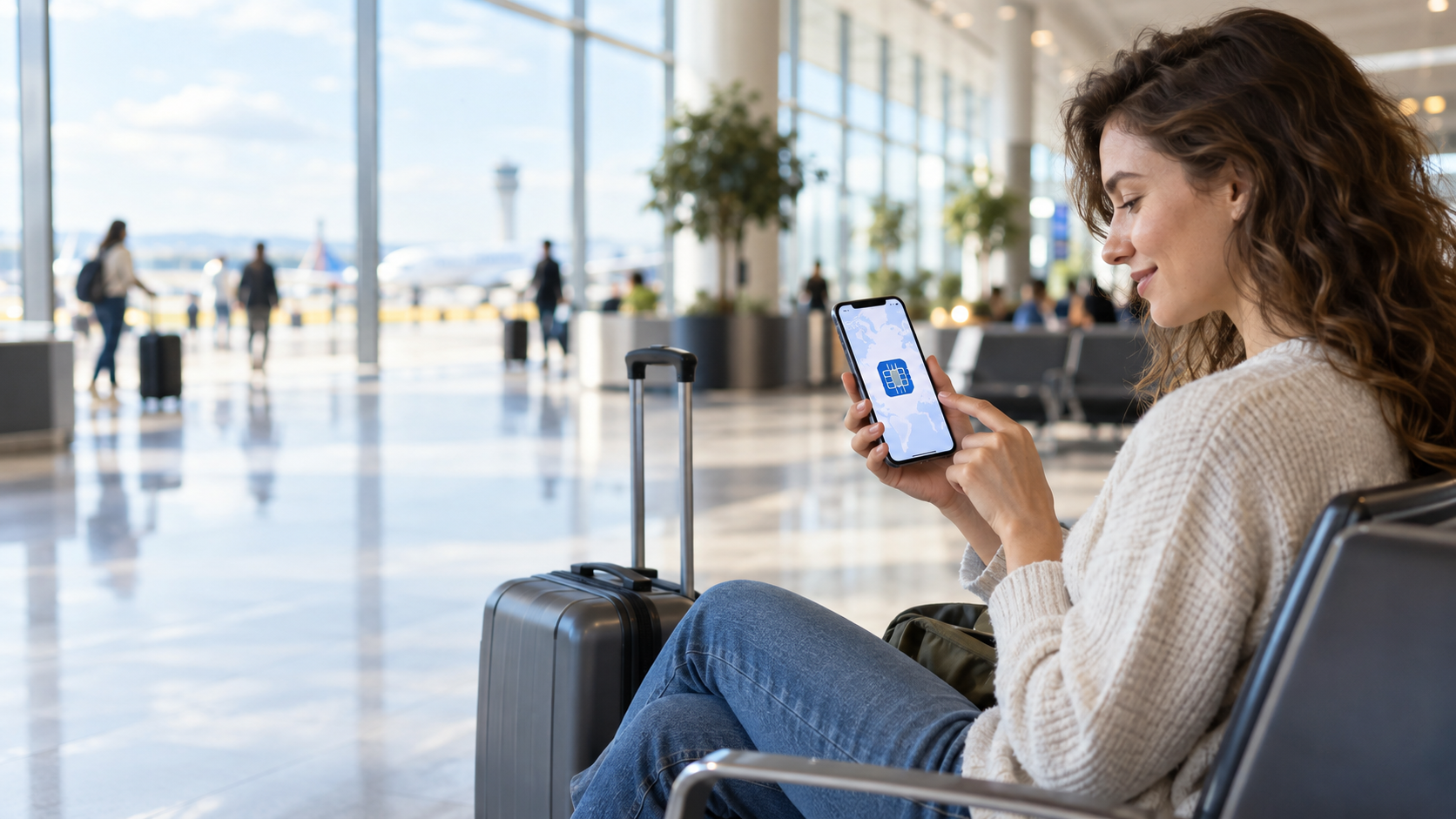
Once you clear customs and enter the arrivals hall, seamless communication becomes your immediate priority. Relying on congested or unencrypted public airport Wi-Fi to book rides, check train platforms, or notify accommodations can introduce delays and security risks.
A travel eSIM is NOT an immigration requirement for the Europe Entry Exit System. However, for instant data to load onward transit tickets without airport counter lines, an ezigo Europe eSIM provides reliable coverage upon landing. It can be installed before departure and used after arrival where network coverage is available.
- Standard EU Itineraries: Explore the ezigo Europe eSIM (30 Areas) for cellular coverage across core Schengen countries.
- Multi-Region Journeys: Choose the ezigo Europe eSIM (40 Areas) if your itinerary includes the UK, Switzerland, or non-EU corridors.
- Network Breakdown: Review our guide to the best eSIM for Europe to compare speeds and package options.
Frequently Asked Questions (FAQ)
Do I need to pay or apply online for the Europe Entry Exit System before flying?
No. You do not apply or pay for EES in advance. EES is a border check process conducted free of charge at the airport/port. ETIAS is the separate online pre-travel authorization that is not yet operational (expected in late 2026); no advance payment or application is required today.
Do Ireland and Cyprus participate in the EES?
No. Ireland and Cyprus do not use EES. Passports will be examined and stamped manually by national border officials upon arrival and departure.
Is a biometric passport mandatory for entry under EES?
No. A biometric passport is only required to use automated self-service kiosks and e-gates. Valid non-biometric passports remain legally accepted and will be processed manually at staffed officer desks.
Do Schengen visa holders provide fingerprints again at EES gates?
No. Fingerprints for short-stay visa holders are already stored in the Visa Information System (VIS) and are not collected again for EES. Only live facial verification takes place.
Do I need an eSIM to clear EES border checks?
No. An eSIM is not an immigration requirement. However, setting up an ezigo eSIM before departure provides immediate cellular data after clearing customs.
About the Editorial Team: Ezigo eSIM Content Team
The Ezigo eSIM Content Team researches international telecom standards, cross-border European travel logistics, and Schengen regulatory frameworks to deliver accurate, up-to-date guidance for global travelers.
Legal Disclaimer: Immigration policies, processing times, and Schengen border rules are subject to change by national authorities. While this guide is updated regularly based on official EU directives, travelers should always cross-check entry requirements via the official European Union Migration and Home Affairs portal before departure.
Update History: September 2026: Confirmed operational status of the Europe Entry Exit System across 29 Schengen borders; clarified that ETIAS remains non-operational until late 2026; updated biometric exemption criteria for VIS visa holders and children under 12.
Official EU Resources & Planning References
- European Union: Official EES Entry Regulations and Directives
- European Commission: Smart Borders & EES Policy Framework
- European Commission: Official Schengen Short-Stay 90/180-Day Calculator
- European Commission: Temporary Internal Border Control Status
- ezigo Travel Guide: Europe Travel Guide for First-Timers
- ezigo Telecom Guide: Finding the Best eSIM for Europe
High-speed data, wherever your journey leads
Enjoy instant, secure mobile data with Ezigo eSIM in 200+ destinations. No physical SIM needed.